Every question below is one real people type into Google about bamboo sheets. Each gets two answers: the short true one, then the full story. Including the questions whose honest answers don't flatter us — those are the ones Google and you should trust us more for answering.
Short answer first. Whole truth second.
We sell bamboo sheets, so you should be suspicious of us. Fair. That's why every answer here starts with the version we'd give a friend — including the downsides — before the detail. If bamboo isn't right for you, one of these answers will tell you.
What are the pros and cons of bamboo sheets?
The pros first, because they are the reason the category exists. Bamboo viscose is a smooth, round filament, so the fabric feels silky rather than crisp, and the softness arrives out of the bag instead of after twenty washes. It moves heat and moisture away from the body better than cotton sheets do, which is the entire argument for hot sleepers. The low-friction surface suits sensitive skin, and because the material stays drier it makes a poorer home for dust mites — the actual allergy trigger in most bedding.
Now the cons of bamboo, stated plainly. Care is the real one: hot water, high dryer heat and fabric softener all shorten the life of any viscose fabric, so this is a material that requires a gentler routine than cotton will tolerate. It costs more than cotton or microfiber. It wrinkles if you leave it sitting in the dryer. And the honest structural objection is that while the plant is a natural, fast-growing crop, the fiber is regenerated through a chemical process — a real difference from cotton, however you weigh it. Whether that trade is worth making is partly a comfort question and partly a values question, and the answer is legitimately different for different people.
Bamboo or cotton — which is the better choice?
Cotton sheets are the more durable option under abuse: long-staple cotton takes a hot wash and keeps going, which is exactly why hotels buy it by the pallet. Bamboo trades some of that ruggedness for drape, breathability and a cooler first hour in bed. If you are deciding on comfort, the property that matters is how warm you sleep; if you are deciding on laundry habits, cotton is the more forgiving choice. The long version is in Bamboo vs Cotton.
What is the downside to bamboo sheets?
That's the complete list. The care difference is the real one: high heat and fabric softener will shorten the life of any viscose fabric. The feel question is taste — bamboo sateen drapes close to the body and slides; percale cotton stands crisp. Neither is wrong. If you love the crackle of a starched hotel bed, buy percale and be happy. If you run hot and want soft, bamboo wins.
Are bamboo sheets worth it?
Worth is a function of the problem you're solving. Bamboo viscose moves heat and moisture away from your body better than cotton, so its value scales with how warm you sleep. At $200–$300 a set, the math gets debatable. At our price, you're paying roughly what mid-grade cotton costs, which removes most of the gamble.
Are bamboo sheets actually good?
The category has a quality spread like any other. The tells for the good stuff: 100% rayon/viscose from bamboo on the label (not a 40% blend), a real weave name (sateen or twill), OEKO-TEX certification, and a seller willing to state fiber content plainly. The full pros-and-cons breakdown is in Are Bamboo Sheets Good?
What brand of bamboo sheets is best?
Bamboo viscose is a commodity fiber woven in a small number of factories. What differs between brands is construction details (deep pockets, corner straps, split-head options for adjustable beds), certification, and how much brand marketing you're paying for. We're biased, but our pitch is exactly that: same mills, fewer middlemen — judge us on the reviews.
Is it healthy to sleep on bamboo sheets?
Two separate things get mixed up here: how viscose is made (an industrial process using chemical solvents — covered honestly in What Is Bamboo Viscose?) and what ends up touching you (regenerated cellulose — essentially the same stuff as cotton). OEKO-TEX Standard 100 tests the finished textile for hundreds of harmful substances. Ours carries it.
Are bamboo sheets hypoallergenic?
“Hypoallergenic” has no legal definition in bedding, so here's the mechanism instead: dust mites need humidity. A sheet that wicks and releases moisture keeps the microclimate drier. Combine that with a tightly woven smooth surface and you get less irritation for sensitive skin and eczema — which is what people actually mean by the word.
Do bamboo sheets help with night sweats and hot flashes?
This is the single most common reason customers tell us they switched. The honest framing: bamboo can't regulate your hormones, but it changes what the following ten minutes feel like — the fabric doesn't hold the heat or the moisture against you. The mechanism, with the caveats, is in Do Bamboo Sheets Actually Keep You Cool?
Can you machine wash bamboo sheets? Can they go in the dryer?
Bamboo viscose doesn't need hand-washing theatrics; it needs low temperatures. Take them out of the dryer promptly and wrinkles mostly hang out. The complete routine — detergents, stains, storage — is in How to Wash Bamboo Sheets.
Can I use Tide (or my regular detergent) on bamboo sheets?
The fiber doesn't care about the brand on the bottle; it cares about harsh additives. Liquid over powder (dissolves fully in cold water), no chlorine bleach, and never fabric softener — softener coats the fiber and kills the breathability you bought the sheets for.
Do bamboo sheets pill?
Pilling happens when fiber ends break and tangle. Long viscose filaments have fewer ends to break. When customers report pilling on any bamboo sheet, the story almost always includes hot washes or a scorching dryer. Keep it cool and the sateen face stays smooth for years.
Do bamboo sheets shrink?
All plant-based fabrics move a little on first contact with water and heat. Manufacturers (us included) cut with shrink allowance, so a fitted sheet still fits after laundering. The variable you control is temperature: cold wash, low dry, no surprises.
How long do bamboo sheets last?
Lifespan tracks two things — wash temperature and rotation. Owning two sets doubles the calendar life of each and halves the urgency of laundry day. That's not upsell math; it's just how fiber fatigue works.
What does thread count mean for bamboo sheets?
Thread count was invented for cotton and gamed even there. Viscose filaments are finer and smoother than cotton, so a 300-count bamboo sateen already has the silky hand people are chasing. When you see implausible counts advertised, that's a red flag about the seller, not a better sheet.
Viscose, rayon, lyocell — what's the difference?
“Rayon from bamboo” and “bamboo viscose” are interchangeable — the FTC requires one of those phrasings, which is why our labels say 100% rayon (viscose) from bamboo. Lyocell uses a different solvent recovered in a closed loop; it's the fiber in most eucalyptus sheets. The full chain from plant to fabric is in What Is Bamboo Viscose?
Is bamboo a natural material?
This is the question the industry answers least honestly. Cotton and linen are spun more or less directly from plant fiber. Bamboo viscose is made by breaking cellulose down chemically and reforming it, which is why the finished product is properly called regenerated cellulose rather than a natural fiber outright, and why the FTC requires the word rayon or viscose on the label. What touches you in a finished bed sheet is inert cellulose, chemically close to cotton. What it took to get there is an industrial process whose environmental record depends on the mill doing the making. Both halves are true, and a seller who tells you only the first half is not being straight with you.
Why are bamboo sheets so expensive?
Viscose production is a real industrial process with real costs, so bamboo will never be microfiber-cheap. Past that, you're mostly paying for customer-acquisition budgets. We keep the price down by boring logistics — fuller containers, no gift boxes, four people in Houston — not by using a lesser fabric, and we've published the line-by-line cost of a $129.95 set so you can check that claim.
Are bamboo sheets eco-friendly?
Bamboo the crop beats cotton on water and pesticides by a mile. Bamboo the fabric passes through a chemical process where mill practices matter and vary. Our certification covers what reaches your bed; we won't pretend the supply chain is magic. That's the honest version, and it's still a better story than conventional cotton's.
Will bamboo sheets fit a thick mattress? What about adjustable beds?
Fit is construction, not fiber. Deep pockets handle tall mattresses and toppers; straps keep the fitted sheet on when an adjustable base bends. If your king mattress splits only at the head, you need a split top king set; two separate Twin XLs need a split king set. Every dimension lives in the size guide.
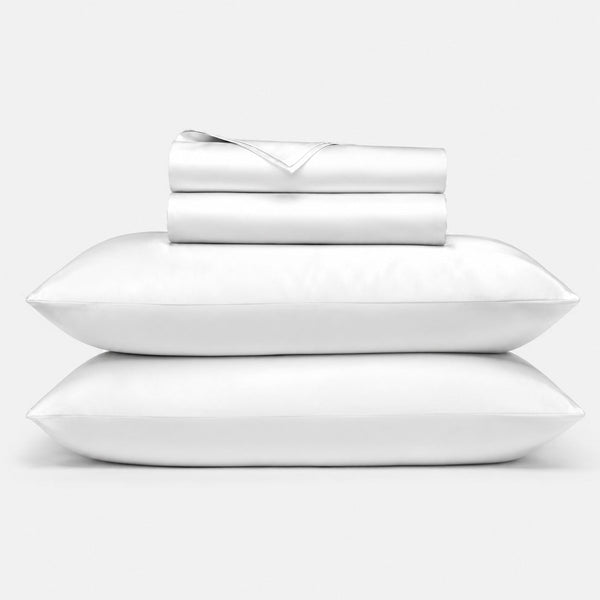
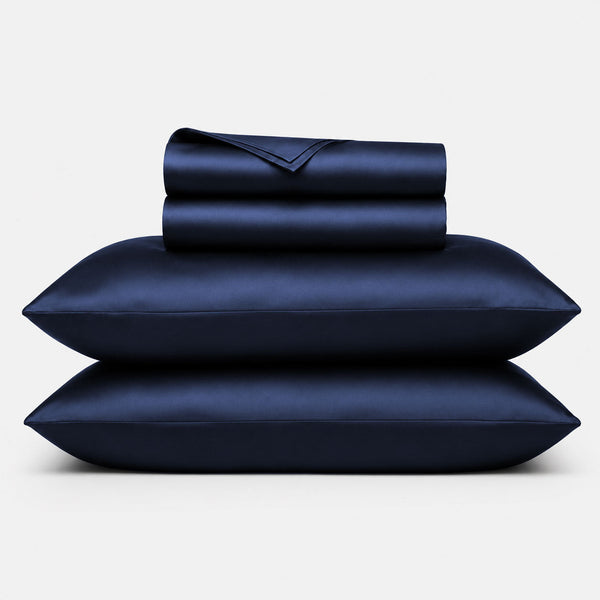
100% Bamboo Luxe Sheet Set
OEKO-TEX certified · 100% rayon (viscose) from bamboo · 17" pockets, corner straps · Queen to Split Top King.
Didn't find your question?
The deep dives: Bamboo vs Cotton · What Is Bamboo Viscose? · How to Wash Bamboo Sheets · Pros, Cons & Downsides · Do They Keep You Cool? · Bamboo vs Eucalyptus vs Linen — or ask us directly via the contact page and we'll add your question here.