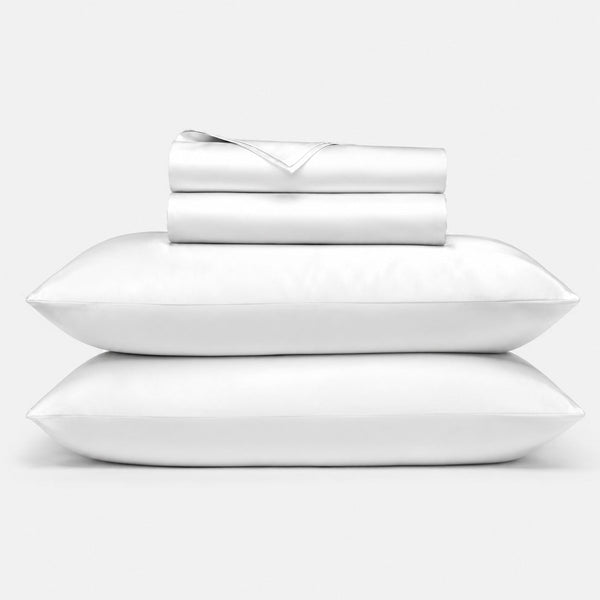
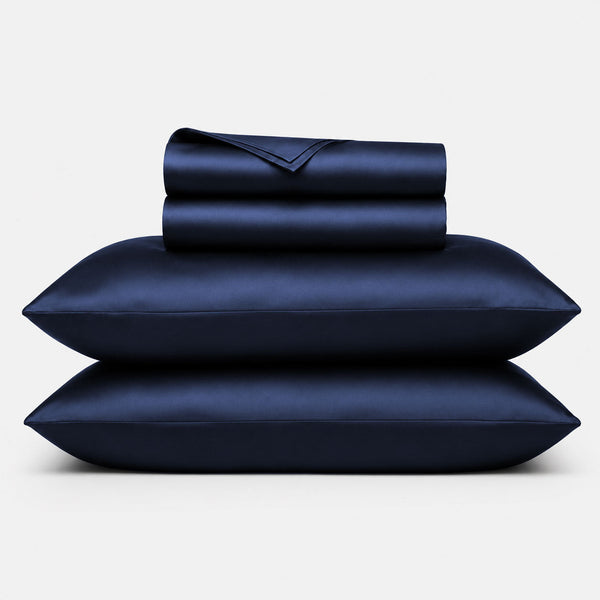
“Bamboo viscose” sounds like a plant hugged a laboratory. It sort of did. Here's exactly how a twenty-foot grass stalk becomes the softest sheet you've owned, what the label is legally required to say, and the safety answer with zero hand-waving.
Bamboo viscose (same thing as rayon from bamboo) is cellulose extracted from bamboo, dissolved, and re-spun into a smooth new fiber. The finished fabric is inert and safe — OEKO-TEX certification tests it for hundreds of substances. The manufacturing uses real chemicals, so “eco” depends on the mill; anyone claiming it's 100% natural is breaking FTC rules.
How a stalk becomes a sheet.
Bamboo is pulped to extract cellulose — the same structural molecule cotton is made of. The cellulose is dissolved into a solution, forced through a spinneret (imagine a steel showerhead), and regenerated as continuous smooth filaments. Those filaments become yarn, the yarn becomes a sateen weave, the weave becomes the thing you fall asleep on.
“Viscose” names that dissolve-and-respin process. “Rayon” is the older American word for the identical thing. Lyocell is the modern cousin: a different, gentler solvent recovered in a closed loop — it's what eucalyptus sheets are made of, and increasingly some bamboo ones.
Is it safe to sleep on?
Yes — and here's the honest structure of that answer. The process uses industrial chemicals (carbon disulfide, caustic soda). The finished fiber is regenerated cellulose: chemically boring, closer to cotton than to anything synthetic. The chemicals do their work at the mill and are washed, neutralized, and (at good mills) recovered — they are not riding along in your pillowcase.
You don't have to take a seller's word for it. OEKO-TEX Standard 100 tests the finished textile — dyes, finishes, residues, heavy metals — against limits stricter than most national regulations. Ours carries the certification; it took our factory a year of work. If a bamboo sheet has no certification and a suspiciously theatrical “100% organic natural bamboo” label, spend your money elsewhere.
Why our label says “rayon from bamboo.”
The FTC has fined major retailers millions for selling “bamboo” textiles without disclosing the fiber is rayon/viscose made from bamboo. The required phrasing is exactly what you'll find on ours: 100% rayon (viscose) from bamboo. A seller who won't write those words on the label is either uninformed or hoping you are — both are useful information.
The environmental math, without the halo.
The crop is exceptional: bamboo regrows from its own roots, drinks rainwater, and needs no pesticides — against cotton's thirst and spray schedule, it's not a contest. The processing is where honesty is owed: solvent recovery varies by mill, and a viscose plant with sloppy chemistry helps nobody. Net: bamboo viscose is a better choice than conventional cotton, a comparable choice to lyocell, and not the zero-impact miracle Instagram sells. That's the whole truth, and it's still a good story.
OEKO-TEX certified, FTC-labeled, plainly priced
100% rayon (viscose) from bamboo · tested finished fabric · the label says exactly what it is.