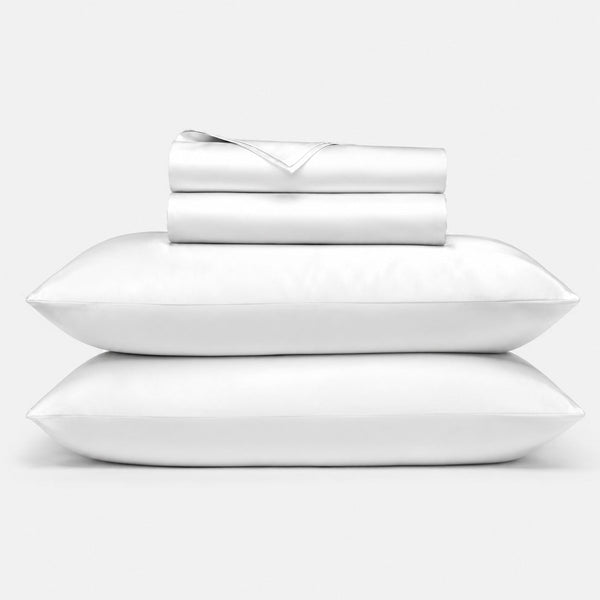
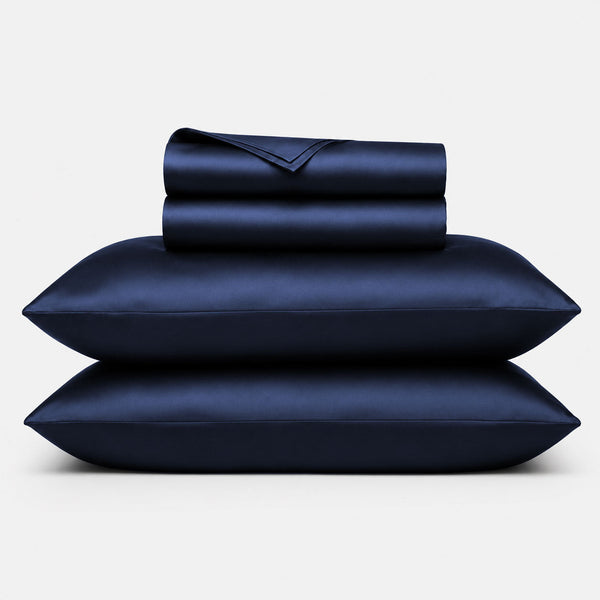
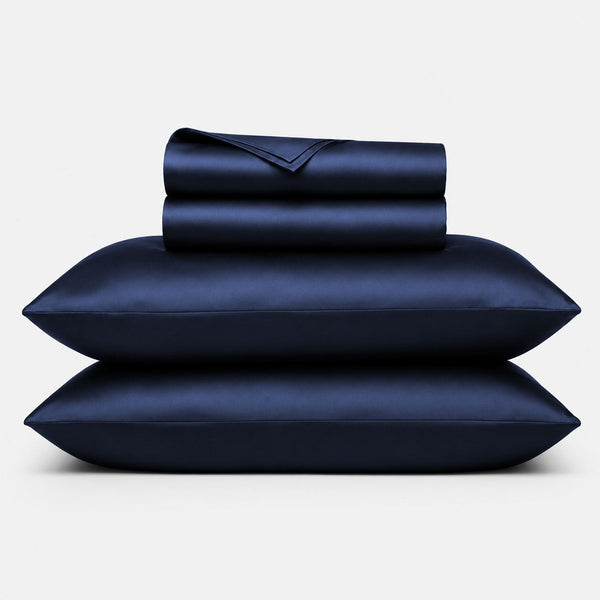
GSM is the number that shows up when a bedding brand has decided thread count is no longer flattering. It is a real measurement with a real standard behind it - and it is also, in the consumer bedding aisle, one of the easiest numbers in the world to quote misleadingly. Here is what it means, and the four moments it lies.
GSM means grams per square meter: the weight of one square meter of fabric, nothing more. It is genuinely useful for comparing two sheets of the same fibre and the same weave, and close to meaningless across different fibres or different products. Most bed sheets land between roughly 90 and 200 GSM; the 400 and 500 GSM figures you see advertised are almost always blankets, comforters or fill weight, not sheeting.
Grams per square meter, and literally nothing else.
GSM - grams per square meter, sometimes written g/m² - is fabric weight. Cut one square meter of the material, weigh it, and the number of grams on the scale is the GSM. That is the whole definition. It does not measure fibre quality, softness, durability, or how cool a sheet sleeps. It measures mass per unit area, which is exactly what its formal name says: the international test methods are ASTM D3776/D3776M, Standard Test Methods for Mass Per Unit Area (Weight) of Fabric, and ISO 3801, Textiles - Woven fabrics - Determination of mass per unit length and mass per unit area.
Two details in those standards matter more than any brand will tell you. ISO 3801 requires the fabric to be conditioned in a standard testing atmosphere before it is weighed, because cellulosic fibres - cotton, linen, viscose - pull moisture out of the surrounding air, and a humid warehouse can add weight that has nothing to do with the cloth. And ASTM D3776 offers four different options, A through D, using different specimen sizes for different situations. A number produced under one method is not automatically comparable to a number produced under another. GSM is a measurement with conditions attached, and the conditions rarely travel with the number onto a product page.
You can also do it at home, roughly: cut a 10 cm by 10 cm square, weigh it on a kitchen scale, multiply the grams by 100. Nobody wants to cut up a sheet they just bought, which is precisely why the number is so rarely checked.
The ranges, and the fact that nobody agrees on them.
Here is the GSM spec ladder as it is generally quoted across the bedding trade for woven bed sheets. Treat it as a rough map of the territory, not a specification - and note the honest caveat underneath it, which is the most important line in this article.
| Fabric type | Typical GSM range quoted | What that weight tends to mean |
|---|---|---|
| Polyester microfiber | 90-120 | Lightweight on the scale, but the fibre traps heat regardless of weight |
| Cotton percale | 110-150 | Crisp, matte, breathable; the classic warm-climate summer sheet |
| Bamboo viscose sateen | 120-180 | Fluid drape and moisture-wicking; sources disagree on the upper bound |
| Cotton sateen | 140-180 | Higher density, smoother, warmer than percale in the same fibre |
| Linen | 150-200+ | Heavy on the scale yet very airy - the clearest proof weight is not warmth |
| Flannel | 160-200+ | Brushed cotton; here a higher GSM genuinely does mean more warmth |
| Blankets, quilts, comforters | 200-600 | A different product category entirely - do not compare these to sheets |
Now the caveat. Those ranges are not enforced by anyone. No regulator, no certification body and no trade association requires a bedding brand to state GSM, to state it honestly, or to state it under a named test method. Reputable guides published this year disagree with each other on the bamboo band and on what a premium hotel actually buys. Thread count at least has an agreed definition it can be gamed against; GSM in consumer bedding does not even have that. Which brings us to the four ways the number misleads.
When the number stops telling the truth.
Lie one: comparing GSM across different fibres. A 120 GSM microfiber sheet and a 120 GSM bamboo viscose sheet weigh the same and behave nothing alike. Polyester does not absorb moisture; it holds heat against you and lets sweat sit on the surface, which is why a hot sleeper can buy a lightweight sheet and still wake up damp. Bamboo viscose wicks along the fibre and releases. Identical number, opposite night. GSM is a valid comparison only when the fibre and the weave are already held constant - which is to say, only when you are choosing between two versions of essentially the same sheet.
Lie two: the category swap. This is the most common one in advertising. A 500 GSM bedding product is not a heroic bed sheet; it is a blanket, a quilt, a fleece throw, or a fill weight for a comforter. Sheeting simply does not go there - you would be sleeping under upholstery. When a listing quotes a GSM in the hundreds for a sheet set, check whether the number belongs to the sheets or to some other item in the photograph.
Lie three: weight sold as quality. Heavier fabric is denser fabric, and density is not virtue. Linen is the standing refutation: it sits at the heavy end of the ladder and is one of the airiest things you can sleep under, because flax fibre is hollow and stiff enough to hold the cloth off your skin. Meanwhile weight can be added temporarily. Heavy sizing and starch - finishes applied at the mill to make cloth feel substantial on the shelf - add real grams that wash out in the first few cycles. A sheet can lose measurable GSM between the store and your third laundry day without anything being technically false on the label.
Lie four: GSM offered instead of fibre content. If a listing leads with a weight and buries what the fabric actually is, the weight is doing a job. Ultra-soft 120 GSM bamboo that turns out to be a rayon-polyester blend is a heavier claim than the fibre deserves. Read the fibre content line first and the GSM second, every time. Ours says 100% rayon (viscose) from bamboo, and that sentence tells you far more about how the sheet will sleep than any number on the scale.
Weight tells you how much fabric there is. It cannot tell you what the fabric is, and that is the only question that matters at 3 a.m.
The one-sentence versionWhen GSM is actually worth reading.
There is a narrow band where the number earns its keep. Comparing two cotton percale sets from the same weave family, GSM is a better signal than thread count, because thread count can be inflated by counting plies while weight cannot be argued with. Buying flannel for a cold room, GSM maps directly onto warmth. Buying linen, GSM tracks how much texture and body you are getting. And if you already own a sheet you love, weighing a small offcut tells you the target to shop against next time - a genuinely useful trick.
Outside that band, use the same method you would use for any spec: work down from what your body does at night, not up from the numbers. Fibre first, weave second, weight a distant third. The right GSM for a warm climate is simply a lower one in a fibre that breathes - and a lightweight sheet in the wrong fibre is still the wrong sheet. If you want the physics of the percale-versus-sateen weave decision, we take it apart in percale vs sateen; if the question is really about heat and comfort, the mechanism lives in whether bamboo sheets keep you cool.
We should disclose our own position here, since we sell sheets: we do not print a GSM figure on our bamboo sets. That is a deliberate choice rather than an oversight. For a single-fibre sateen, the weight would not tell you the thing you are trying to find out, and publishing an unconditioned number under no named test method would just be one more unverifiable digit in an aisle that already has too many. The fibre content line is the honest spec, so that is the one we lead with.
Fibre content, not fabric weight
100% rayon (viscose) from bamboo · OEKO-TEX certified · 17-inch pockets, corner straps · from $129.95, free shipping over $75.
The questions people also ask.
What is a good GSM for bedding?
A 110 GSM cotton percale is an excellent summer sheet and a poor January one. A 180 GSM flannel is the reverse. The number only becomes meaningful once you have fixed the fibre, and even then it is a preference dial rather than a quality score.
Is a 130 GSM bed sheet good?
At 130 GSM in cotton you are getting a light, breathable, crisp sheet with a dry hand. At 130 GSM in polyester microfiber you are getting a lightweight sheet that still sleeps hot, with less drape and more static. Same weight, different outcome - which is lie one from the section above, in its most common form.
Is 300 GSM a heavy blanket?
Is GSM better than thread count?
Thread count is inflated by counting each ply of a multi-ply yarn separately, which is how a 1,500 thread count set can be a 300 count fabric with creative arithmetic. Anything advertised above roughly 600 is marketing fiction. GSM cannot be inflated the same way, but it can be inflated temporarily with sizing, and it can be quoted without a test method. Both numbers are sanity checks. Neither is a ranking.
Does bamboo have a GSM or a thread count?
What GSM are hotel sheets?
The hotel feel most people are chasing is not really a weight anyway. It is a crisp percale weave plus industrial laundering at temperatures and pressures no home machine reproduces. Buying to a GSM number will not get you there.
How can I find the GSM of sheets I already own?
Use an offcut from a hem or a pillowcase you are willing to sacrifice, weigh it dry and again after the sheet has been washed a few times, and you have a usable target to shop against. Do not do this to a set you might return.